INTRODUCTION
Despite the garishness of the advertisement below, a political brand can indeed have positive brand equity. This may be achieved through harnessing the popularity of a candidate and the delivery of on-target messaging.

THEORETICAL FRAMEWORK
This analysis assesses the equity of political brands through the lens of Keller’s model (2012).

HARNESSING POPULARITY
A political brand may achieve positive brand equity by harnessing the popularity of a candidate. Parker holds that perceived brand quality and brand loyalty are strong drivers of brand equity (2012: p. 211). He assessed the candidates in the 2008 Presidential Election with reference to these two dimensions. Overall, Barack Obama’s measures for these two dimensions were greater than those of any other candidate (ibid, p. 224).


Obama performed better along both dimensions with voters outside of his party than the other candidates, in particular his primary challenger Hilary Clinton. This analysis argues that Obama’s cross-over appeal derived from his messianic charisma as opposed to his policy proposals, which were largely similar to those of Clinton.
A political brand may hold positive brand equity by harnessing the popularity of a candidate. This is because the political brand may ‘short-circuit’ Keller’s pyramid (2012) by directly latching onto the resonance the candidate has with the body politic.
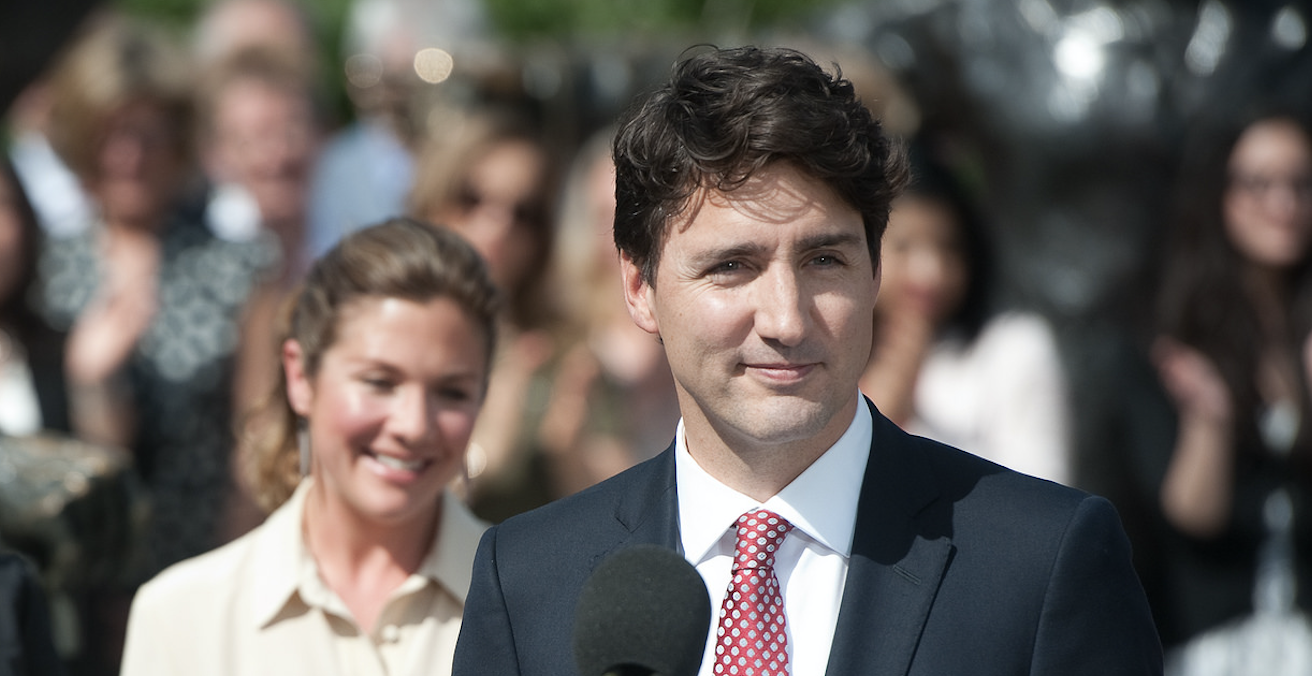
Another example of this argument is the electoral success of Canadian Prime Minister Justin Trudeau. In 2011, his party (“The Liberal Party”) was almost wiped off the political landscape (CBC, 2019). Yet because of Trudeau’s immense popularity with the electorate, he led the party from irrelevancy to winning a landslide election in 2015 (CBC, 2015).

The Liberal Party’s policy platform did not change much from 2011 to 2015. However, the party ran with a candidate whose effortless charm resonated strongly with the Canadian voters.
ON-TARGET MESSAGING
ON-TARGET MESSAGING
Popularity is not the only way to achieve resonance with voters. If the core message of a political brand strikes a chord with the electorate, resonance may be achieved in spite of an unpopular candidate. The most obvious example of this is the election of President Donald Trump.

Trump was largely unpopular prior to his election (Palmer, Bade and Bresnahan, 2016). Yet due to his unconventional and aptly-timed message of nationalism and isolationism, he was able to triumph over his political adversaries.

However, a prerequisite to Trump’s success was the salience of his brand (Keller, 2012). While Trump was not broadly loved, Americans knew who he was. So when he spoke, people listened. As such, his message had the opportunity to resonate with the public, which it did.
In the Australian context, Clive Palmer is attempting to replicate Trump’s message. It appears to be working. The projected primary vote of the UAP is surging in the battleground seats listed below.

Palmer does not enjoy the same extent of celebrity status as Trump does in the US. He needs to build even more salience within the Australian body politic in order achieve greater resonance. Accordingly, he is deftly investing over $50 million in order to disseminate pervasive awareness of his political brand (McCutcheon, 2019).
REFERENCE LIST
BBC News. (2015). Canada’s Liberals sweep to power. [online] Available at: https://www.bbc.co.uk/news/world-us-canada-34578213 [Accessed 18 May 2019].
CBC. (2015). CBC News: Election 2015 roundup. [online] Available at: https://www.cbc.ca/news2/interactives/results-2015/ [Accessed 18 May 2019].
CBC. (2019). With 6 months to go, Justin Trudeau is up against history | CBC News. [online] Available at: https://www.cbc.ca/news/politics/grenier-trudeau-six-months-1.5102336 [Accessed 18 May 2019].
Keller, K. L. (2012). Strategic Brand Management. 4th ed. Boston: Pearson.
Mabley, B. (2019). Justin Trudeau and the SNC Lavalin Scandal in Canada – AIIA. [online] Australian Institute of International Affairs. Available at: https://www.internationalaffairs.org.au/australianoutlook/justin-trudeau-snc-lavalin-scandal-canada/ [Accessed 18 May 2019].
McCutcheon, P. (2019). Clive Palmer to spend $60 million on campaign advertising blitz, senator claims. [online] ABC News. Available at: https://www.abc.net.au/news/2019-04-29/clive-palmer-sixty-million-dollar-election-advertising-blitz/11053778 [Accessed 11 May 2019].
Mystal, E. (2019). How Does Donald Trump Keep Getting Away With It?. [online] The Nation. Available at: https://www.thenation.com/article/trump-threat-to-democracy/ [Accessed 18 May 2019].
Palmer, A., Bade, R. and Bresnahan, J. (2016). Poll: Trump’s popularity soars after election. [online] POLITICO. Available at: https://www.politico.com/story/2016/11/donald-trump-popular-poll-231694 [Accessed 18 May 2019].
Parker, B. (2012). Candidate Brand Equity Valuation: A Comparison of U.S. Presidential Candidates During the 2008 Primary Election Campaign. Journal of Political Marketing, 11(3), pp.208-230.
The Australian. (2019). newspoll | The Australian. [online] Available at: https://www.theaustralian.com.au/topics/newspoll [Accessed 18 May 2019].
The Business Times. (2016). Thumbs up for Trump. [online] Available at: https://www.businesstimes.com.sg/infographics/thumbs-up-for-trump [Accessed 18 May 2019].
The Courier Mail. (2018). ‘Palmer not making a political comeback, we promise’. [online] Available at: https://www.couriermail.com.au/news/queensland/queensland-government/clive-palmer-not-making-a-political-comeback-we-promise-spokesman-says/news-story/3169c6f17e5b89c6dcb6947a72b89453 [Accessed 18 May 2019].

 ONA Coffee