TOPIC INTRODUCTION
This assignment is the culmination of a semester’s worth of brainstorming. If you return to my very first blog post for this course, you will note that I devised a conceptual blueprint for a political party: The New Founding Fathers of Australia (NFFA). Since my first blog post, I have meditated on the viability of launching a political campaign for the NFFA. To my delight, Dr Andrew Hughes allowed me to transform this pet project of mine into an assignment for course credit for MKTG2033 Advertising.
Whereas the campaign assignment focused on the practicalities of advertising a political party, this WYOT post will investigate how the NFFA may build Customer-Based Brand Equity (CBBE) (Keller, 2012) with the Australian electorate.
MOTIVATION
The first time I saw James DeMonaco’s The Purge (2013), I was absolutely transfixed by the underlying concept of the movie. That is, a political party (The New Founding Fathers of America) seized power and legalised all crime for one night per year in order to allow the American populace to “purge” themselves of their baser impulses, creating a harmonious and prosperous society. Not only did this concept intrigue me, but the film had brilliant cinematography and a deeply satisfying, and unexpectedly heartwarming, ending.

I was fascinated by this movie because it masterfully incorporated themes of the darkness of human psychology, the rise of authoritarian regimes and the broadening cultural gulf between the rich and the poor. These themes were skillfully woven into a cracking-good plot, creating an exhilarating and thought-provoking work of art.
When I discovered I was able to explore and expound upon James DeMonaco’s masterpiece FOR COURSE CREDIT, I leapt at the opportunity.
CBBE FRAMEWORK
This analysis applies Keller’s CBBE Framework (2012) to the hypothetical NFFA party.

Brand Identity
Brand Identity is the unique configuration of brand associations that brand strategy strives to create and maintain (Aaker, 1996). In simple terms, Brand Identity is presenting a recognisable brand name that corresponds with the product or service you are selling. For example, the “McDonalds” name is recognised by most people as a restaurant where you can buy cheap hamburgers.

Brand identity is increasingly considered the central constituent to brand equity (Burmann, Jost-Benz & Riley, 2009). After all, brand identity serves as the foundation of Keller’s Brand Equity Model (2012) and is a necessary prerequisite to resonance. This is logical, you cannot resonate with a brand if you do not know that it exists.
The Australian political landscape is replete with upstart political parties. As such, without an adequate brand image, the NFFA’s may simply get lost in the sea of election coverage.

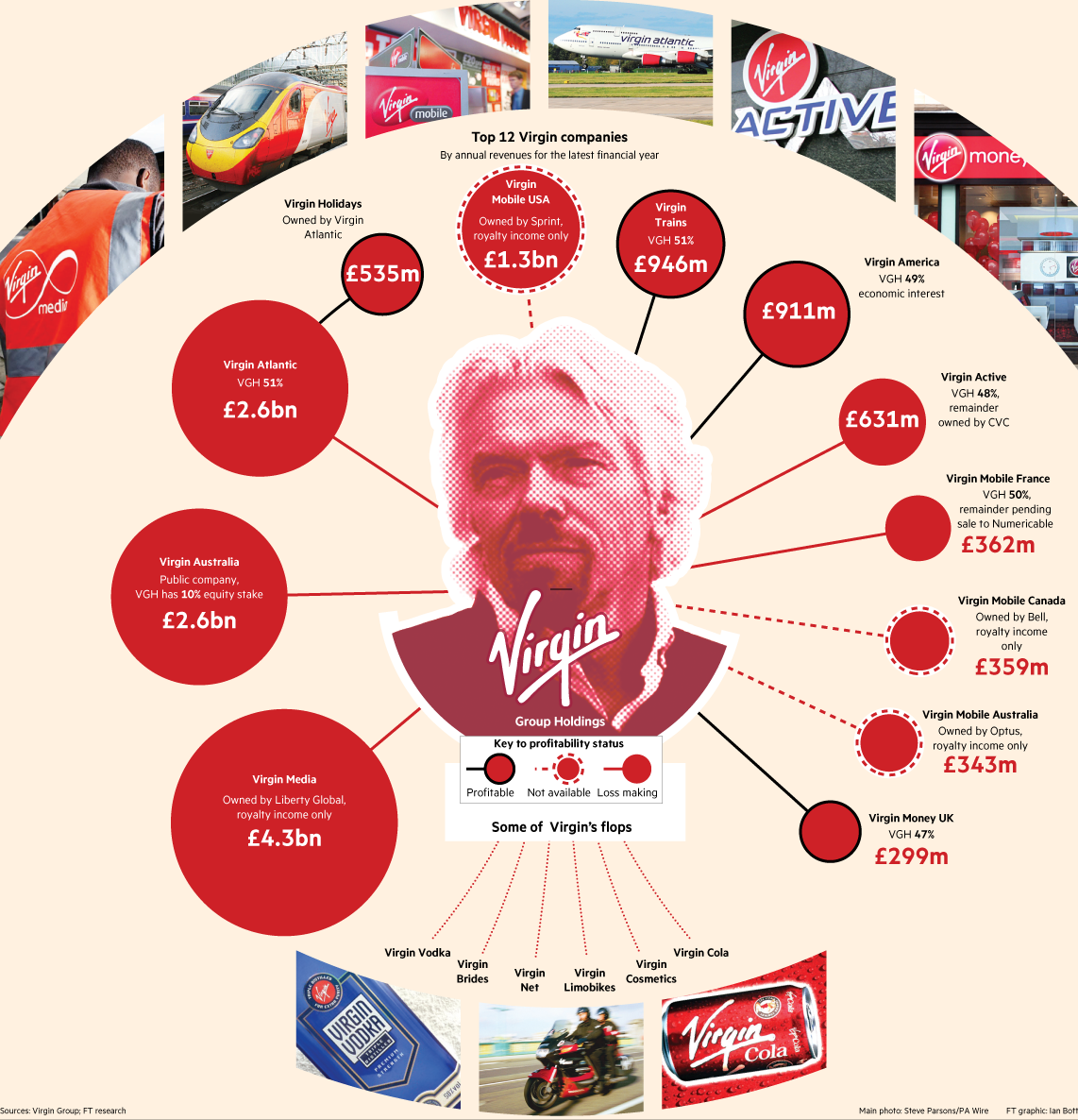
To stand out from the crowd, the NFFA may coordinate Richard Branson-style publicity stunts (Moore, 2014) and Donald Trump-style rallies (Wells et al, 2016). These events are to take place in highly-visible public locales, such as Kings Cross in Sydney, Fitzroy Gardens in Melbourne and Fortitude Valley in Brisbane.
These stunts and rallies are to be attended and driven by NFFA volunteers. These volunteers may be encouraged to wear “Purge Masks” These masks are cheap and widely-available. Moreover, “Purge Masks” have entered the popular imagination (O’Connor & Klinkmann, 2003). They are used by criminals (The Falkirk Herald, 2019) and Halloween party-goers (Shaw, 2018) alike to evoke feelings of terror and dread in onlookers.
Mass gatherings of masked individuals in public locales would certainly achieve some degree of traditional and social media coverage, and therefore brand image (Keller, 2012) in the Australian market. In terms of the PESO Model (Belden, 2013), the NFFA’s brand strategy should focus on the dissemination of Earned, Shared and Owned Medias to develop its brand image.

Specifically, the NFFA may use their social media channels in order to guide the public discussion so that the link between the stunts and rallies covered by the larger channels and the NFFA, as an upstart political party, is clear in the minds of as many voters as possible.
Brand Meaning
Brand meaning is comprised of the “performance” and “imagery” building blocks (Keller, 2012). Performance refers to the extent to which your brand’s underpinning product or service satisfies your customers’ tangible needs. Imagery refers to the extent to which your brand satisfies your customers’ psychosocial needs.

Political parties are not selling a tangible product or service. They are unique marketers in that respect. Therefore, the imagery building block becomes the ascendant component of brand meaning. As such, the NFFA should focus on articulating how their policy platform may meet the psychosocial needs of the Australian electorate.
In order to do so, the NFFA may present the following message. That is, the frustration and tedium of modern life in Australia may be remedied by an annual Purge Night.

Brand Response
Brand response is best defined as the consumers’ interpretation and their expressed criticism and/or praise of the message communicated through brand meaning. Brand response is comprised of the “judgements” and “feelings” building blocks.
Judgements
Judgements are in turn comprised of quality, credibility, consideration and superiority aspects (Keller, 2012). This inquiry is centered around the perceived and actual utility of a tangible product or service. Again, it is not particularly relevant to building the brand equity of a new political party. As the NFFA has never held majority government, it cannot evince quality, credibility or superiority in relation to, for example, Labor or the Liberals.

Feelings
Feelings are the consumers’ emotional reaction to the brand meaning. This is a much more pertinent inquiry for a political party. Indeed, voters tend to vote with their hearts, not their minds. This explains the recent spate of victories enjoyed by populist movements in the UK (Brexit – 2016), the US (Trump – 2016), India (Modi – 2019) and the Ukraine (Zelensky – 2019).
The feelings that the NFFA seeks to evoke in voters are fun, excitement and self-respect.
Fun & Excitement
In a world where our lives are increasingly spent online, people are continuously insulated from the dangers posed by the natural world. This suffocation of safety is depriving modern Australians of sorely needed thrills. The Purge Night is a game that offers a deep indulgence through the satiation of animalistic desires, but at the price of risk of death. The severe consequences of purging contribute to its allure, rather than detract from it. In that way, purging is analogous to extreme sports (Self et al, 2007). Therefore, the NFFA pitches itself to thrill seeking personality types that want to see the political landscape shaken up.

Self-Respect
The annual Purge Night offers a chance for the disrespected and downtrodden to attain vengeance on those who have wronged them. This could be an employee getting back at his or her boss, or a jilted lover turning the tables on their ex. In an environment of surging income inequality (Oxfam International, 2015) and rates of infidelity (Smith, 2012), the feeling of self-respect has never been more prized and elusive. The NFFA offers it to Australia on a silver platter.


Resonance
Resonance sits at the apex of the CBBE pyramid. A brand attains resonance when consumers feel an intimate, personal and unique connection with the brand (Keller, 2012). The categories of resonance relevant to our inquiry are “active engagement” and “sense of community”.
Active Engagement
This is a particularly important component of resonance. To build active engagement, the NFFA may construct a multi-platform social media presence. Consumers will likely react with incredulity when they find out about the NFFA. They might @ the NFFA with tweets such as “is this for real?”.
It is absolutely crucial that the NFFA proactively monitor its platforms and respond to such inquiries as quickly, and preferably as uniquely, as possible. Spotify is renowned for speed at which it provides tailored responses to customer queries and complaints (Beuly, 2016; Skinbjerg, 2016). This dedication to handling customer inquiries promptly is a strong driver of Spotify’s CBBE.

Sense of Community
This means that consumers of the brand experience feelings of kinship and fraternity with other consumers of the brand (Keller, 2012). Here, the NFFA seeks to create a community focused around purging.

The purge masks mentioned above may serve as a de facto uniform of the NFFA. They bind party members together through easily recognisable and referable, but also individually-customisable, attire.

Since the act of purging is designed to cleanse Australians of the vicissitudes of modern life, the NFFA fosters a deeper sense of community than a mere political party. In essence, it is more of a religion. Thus, the NFFA may employ principles of religious marketing (Wrenn, 2011) to carve out a section of society devoted to unleashing bottled-up rage.

The stunts and rallies mentioned above are events which may be designed to build communal relationships between NFFA members. Such events are analagous to sporting events, in that they are experiences which impart brand value.
The environment in which a sporting event takes place evinces the primary emotional reactions of pleasure, arousal and dominance from consumers (Uhrich & Koenigstorfer 2009). The NFFA may borrow marketing techniques from sports teams to evince similar emotional reactions from the audiences of their rallies and stunts. For example, NFFA leaders may initiate chants and Mexican waves to create a single-minded mob mentality within the audience.
CONCLUSION
In the contemporary political environment, voters demand bold and unconventional solutions to modern problems. Mainstream political parties have been woefully inadequate at tackling the economic and cultural dilemmas of our time. Against this backdrop, upstart political parties are well-placed to seize power. Yet competition amongst them is fierce.
Nonetheless, if the NFFA communicates its platform to appeal to the psychological hollowness afflicting modern Australians, then it may one day achieve majority government, not in spite of, but because of its outlandish policy proposal.
Reference List
Aaker, D.A. (1996). Building Strong Brands. London: Simon & Schuster, Free Press.
Belden, C. (2013). Paid, earned and owned media: Convergence in social media. Journal of Digital & Social Media Marketing, 1(3), pp.243-250.
Beuly, C. (2016). The Key to Spotify’s Brand Relevance: Customer Obsession. [online] Prophet.com. Available at: https://www.prophet.com/2016/07/key-to-spotifys-brand-relevance/ [Accessed 4 May 2019].
Burmann, C., Jost-Benz, M. and Riley, N. (2009). Towards an identity-based brand equity model. Journal of Business Research, 62(3), pp.390-397.
Keller, K. L. (2012). Strategic Brand Management. 4th ed. Boston: Pearson.
Moore, S. (2014). Branson: Behind the Mask by Tom Bower – review. [online] the Guardian. Available at: https://www.theguardian.com/books/2014/feb/12/branson-behind-mask-tom-bower-review [Accessed 24 Mar. 2019].
O’Connor, A. and Klinkmann, S. (2003). Popular Imagination, Essays on Fantasy and Cultural Practice. Béaloideas (The Journal of the Folklore of Ireland Society), 71, p.262.
Oxfam International (2015). Wealth: Having It All and Wanting More. [online] Oxfam International. Available at: https://www.oxfam.org/en/pressroom/pressreleases/2015-01-19/richest-1-will-own-more-all-rest-2016 [Accessed 24 Mar. 2019].
Ratson, M. (2017). HuffPost is now a part of Oath. [online] The Huffington Post. Available at: https://www.huffpost.com/entry/7-things-you-should-know-after-infidelity_n_9399560?guccounter=1&guce_referrer=aHR0cHM6Ly93d3cuZ29vZ2xlLmNvbS5hdS8&guce_referrer_sig=AQAAAFSMi4O4C5mLDU_CbeQdHXIwBR_TaokEgET2HuPG7BLdcZUizne1eQ0XwDi2Farssj0LM2oXhelJQGiCRYW3j8SeeKiKfmNoGLDExPbJsNTEG85er5kzChf6JzrpVMsIjhfynXoIGvZ31U8q2HafVY3ZTXWgp6h6agistDIA_uyT [Accessed 29 May 2019].
Self, D., Henry, E., Findley, C. and Reilly, E. (2007). Thrill seeking: the type T personality and extreme sports. International Journal of Sport Management and Marketing, 2(1/2), p.175.
Shaw, S. (2018). How To Be “The Purge” For Halloween. [online] Refinery29. Available at: https://www.refinery29.com/en-us/2018/10/212889/the-purge-costume-ideas [Accessed 25 May 2019].
Skinbjerg, S. (2016). A lesson in exceptional customer experience | Ungapped. [online] Ungapped. Available at: https://ungapped.com/a-lesson-in-exceptional-customer-experience/ [Accessed 4 May 2019].
Smith, S. (2012). Infidelity: why it’s better not to know. [online] The Sydney Morning Herald. Available at: https://www.smh.com.au/lifestyle/infidelity-why-its-better-not-to-know-20120621-20q9e.html [Accessed 29 May 2019].
The Canberra Times. (2019). Liberals talk tax, Labor backs health care. [online] Available at: https://www.canberratimes.com.au/story/6054052/liberals-talk-tax-labor-backs-health-care/ [Accessed 30 May 2019].
The Falkirk Herald. (2019). ‘Purge’ mask-wearing getaway driver jailed after failed Jaguar theft in Camelon. [online] Available at: https://www.falkirkherald.co.uk/news/crime/purge-mask-wearing-getaway-driver-jailed-after-failed-jaguar-theft-in-camelon-1-4927925 [Accessed 25 May 2019].
Uhrich, S. and Koenigstorfer, J. (2009). Effects of atmosphere at major sports events: a perspective from environmental psychology. International Journal of Sports Marketing and Sponsorship, 10(4), pp.56-75.
Wells, C., Shah, D., Pevehouse, J., Yang, J., Pelled, A., Boehm, F., Lukito, J., Ghosh, S. and Schmidt, J. (2016). How Trump Drove Coverage to the Nomination: Hybrid Media Campaigning. Political Communication, 33(4), pp.669-676.
Wrenn, B. (2011). Religious Marketing is Different. Services Marketing Quarterly, 32(1), pp.44-59.














 ONA Coffee