Write Your Own Topic (WYOT)

TOPIC INTRODUCTION

This assignment is the culmination of a semester’s worth of brainstorming. If you return to my very first blog post for this course, you will note that I devised a conceptual blueprint for a political party: The New Founding Fathers of Australia (NFFA). Since my first blog post, I have meditated on the viability of launching a political campaign for the NFFA. To my delight, Dr Andrew Hughes allowed me to transform this pet project of mine into an assignment for course credit for MKTG2033 Advertising.

Whereas the campaign assignment focused on the practicalities of advertising a political party, this WYOT post will investigate how the NFFA may build Customer-Based Brand Equity (CBBE) (Keller, 2012) with the Australian electorate.

MOTIVATION

The first time I saw James DeMonaco’s The Purge (2013), I was absolutely transfixed by the underlying concept of the movie. That is, a political party (The New Founding Fathers of America) seized power and legalised all crime for one night per year in order to allow the American populace to “purge” themselves of their baser impulses, creating a harmonious and prosperous society. Not only did this concept intrigue me, but the film had brilliant cinematography and a deeply satisfying, and unexpectedly heartwarming, ending.

I was fascinated by this movie because it masterfully incorporated themes of the darkness of human psychology, the rise of authoritarian regimes and the broadening cultural gulf between the rich and the poor. These themes were skillfully woven into a cracking-good plot, creating an exhilarating and thought-provoking work of art.

When I discovered I was able to explore and expound upon James DeMonaco’s masterpiece FOR COURSE CREDIT, I leapt at the opportunity.

CBBE FRAMEWORK

This analysis applies Keller’s CBBE Framework (2012) to the hypothetical NFFA party.

(2012)

Brand Identity

Brand Identity is the unique configuration of brand associations that brand strategy strives to create and maintain (Aaker, 1996). In simple terms, Brand Identity is presenting a recognisable brand name that corresponds with the product or service you are selling. For example, the “McDonalds” name is recognised by most people as a restaurant where you can buy cheap hamburgers.
Brand identity is increasingly considered the central constituent to brand equity (Burmann, Jost-Benz & Riley, 2009). After all, brand identity serves as the foundation of Keller’s Brand Equity Model (2012) and is a necessary prerequisite to resonance. This is logical, you cannot resonate with a brand if you do not know that it exists.

The Australian political landscape is replete with upstart political parties. As such, without an adequate brand image, the NFFA’s may simply get lost in the sea of election coverage.

To stand out from the crowd, the NFFA may coordinate Richard Branson-style publicity stunts (Moore, 2014) and Donald Trump-style rallies (Wells et al, 2016). These events are to take place in highly-visible public locales, such as Kings Cross in Sydney, Fitzroy Gardens in Melbourne and Fortitude Valley in Brisbane.

These stunts and rallies are to be attended and driven by NFFA volunteers. These volunteers may be encouraged to wear “Purge Masks” These masks are cheap and widely-available. Moreover, “Purge Masks” have entered the popular imagination (O’Connor & Klinkmann, 2003). They are used by criminals (The Falkirk Herald, 2019) and Halloween party-goers (Shaw, 2018) alike to evoke feelings of terror and dread in onlookers.

Mass gatherings of masked individuals in public locales would certainly achieve some degree of traditional and social media coverage, and therefore brand image (Keller, 2012) in the Australian market. In terms of the PESO Model (Belden, 2013), the NFFA’s brand strategy should focus on the dissemination of Earned, Shared and Owned Medias to develop its brand image.

(Belden, 2013)

Specifically, the NFFA may use their social media channels in order to guide the public discussion so that the link between the stunts and rallies covered by the larger channels and the NFFA, as an upstart political party, is clear in the minds of as many voters as possible.

Brand Meaning

Brand meaning is comprised of the “performance” and “imagery” building blocks (Keller, 2012). Performance refers to the extent to which your brand’s underpinning product or service satisfies your customers’ tangible needs. Imagery refers to the extent to which your brand satisfies your customers’ psychosocial needs.

Political parties are not selling a tangible product or service. They are unique marketers in that respect. Therefore, the imagery building block becomes the ascendant component of brand meaning. As such, the NFFA should focus on articulating how their policy platform may meet the psychosocial needs of the Australian electorate.

In order to do so, the NFFA may present the following message. That is, the frustration and tedium of modern life in Australia may be remedied by an annual Purge Night.

Brand Response

Brand response is best defined as the consumers’ interpretation and their expressed criticism and/or praise of the message communicated through brand meaning. Brand response is comprised of the “judgements” and “feelings” building blocks.

Judgements

Judgements are in turn comprised of quality, credibility, consideration and superiority aspects (Keller, 2012). This inquiry is centered around the perceived and actual utility of a tangible product or service. Again, it is not particularly relevant to building the brand equity of a new political party. As the NFFA has never held majority government, it cannot evince quality, credibility or superiority in relation to, for example, Labor or the Liberals.

(The Canberra Times, 2019)

Feelings

Feelings are the consumers’ emotional reaction to the brand meaning. This is a much more pertinent inquiry for a political party. Indeed, voters tend to vote with their hearts, not their minds. This explains the recent spate of victories enjoyed by populist movements in the UK (Brexit – 2016), the US (Trump – 2016), India (Modi – 2019) and the Ukraine (Zelensky – 2019).

The feelings that the NFFA seeks to evoke in voters are fun, excitement and self-respect.

Fun & Excitement

In a world where our lives are increasingly spent online, people are continuously insulated from the dangers posed by the natural world. This suffocation of safety is depriving modern Australians of sorely needed thrills. The Purge Night is a game that offers a deep indulgence through the satiation of animalistic desires, but at the price of risk of death. The severe consequences of purging contribute to its allure, rather than detract from it. In that way, purging is analogous to extreme sports (Self et al, 2007). Therefore, the NFFA pitches itself to thrill seeking personality types that want to see the political landscape shaken up.

Self-Respect

The annual Purge Night offers a chance for the disrespected and downtrodden to attain vengeance on those who have wronged them. This could be an employee getting back at his or her boss, or a jilted lover turning the tables on their ex. In an environment of surging income inequality (Oxfam International, 2015) and rates of infidelity (Smith, 2012), the feeling of self-respect has never been more prized and elusive. The NFFA offers it to Australia on a silver platter.

(Oxfam International, 2015)
(Ratson, 2017)

Resonance

Resonance sits at the apex of the CBBE pyramid. A brand attains resonance when consumers feel an intimate, personal and unique connection with the brand (Keller, 2012). The categories of resonance relevant to our inquiry are “active engagement” and “sense of community”.

Active Engagement

This is a particularly important component of resonance. To build active engagement, the NFFA may construct a multi-platform social media presence. Consumers will likely react with incredulity when they find out about the NFFA. They might @ the NFFA with tweets such as “is this for real?”.

It is absolutely crucial that the NFFA proactively monitor its platforms and respond to such inquiries as quickly, and preferably as uniquely, as possible. Spotify is renowned for speed at which it provides tailored responses to customer queries and complaints (Beuly, 2016; Skinbjerg, 2016). This dedication to handling customer inquiries promptly is a strong driver of Spotify’s CBBE.

Sense of Community

This means that consumers of the brand experience feelings of kinship and fraternity with other consumers of the brand (Keller, 2012). Here, the NFFA seeks to create a community focused around purging.

A heartwarming community

The purge masks mentioned above may serve as a de facto uniform of the NFFA. They bind party members together through easily recognisable and referable, but also individually-customisable, attire.

Since the act of purging is designed to cleanse Australians of the vicissitudes of modern life, the NFFA fosters a deeper sense of community than a mere political party. In essence, it is more of a religion. Thus, the NFFA may employ principles of religious marketing (Wrenn, 2011) to carve out a section of society devoted to unleashing bottled-up rage.

The stunts and rallies mentioned above are events which may be designed to build communal relationships between NFFA members. Such events are analagous to sporting events, in that they are experiences which impart brand value.

The environment in which a sporting event takes place evinces the primary emotional reactions of pleasure, arousal and dominance from consumers (Uhrich & Koenigstorfer 2009). The NFFA may borrow marketing techniques from sports teams to evince similar emotional reactions from the audiences of their rallies and stunts. For example, NFFA leaders may initiate chants and Mexican waves to create a single-minded mob mentality within the audience.

CONCLUSION

In the contemporary political environment, voters demand bold and unconventional solutions to modern problems. Mainstream political parties have been woefully inadequate at tackling the economic and cultural dilemmas of our time. Against this backdrop, upstart political parties are well-placed to seize power. Yet competition amongst them is fierce.

Nonetheless, if the NFFA communicates its platform to appeal to the psychological hollowness afflicting modern Australians, then it may one day achieve majority government, not in spite of, but because of its outlandish policy proposal.

Reference List

Aaker, D.A. (1996). Building Strong Brands. London: Simon & Schuster, Free Press.

Belden, C. (2013). Paid, earned and owned media: Convergence in social media. Journal of Digital & Social Media Marketing, 1(3), pp.243-250.

Beuly, C. (2016). The Key to Spotify’s Brand Relevance: Customer Obsession. [online] Prophet.com. Available at: https://www.prophet.com/2016/07/key-to-spotifys-brand-relevance/ [Accessed 4 May 2019].

Burmann, C., Jost-Benz, M. and Riley, N. (2009). Towards an identity-based brand equity model. Journal of Business Research, 62(3), pp.390-397.

Keller, K. L. (2012). Strategic Brand Management. 4th ed. Boston: Pearson.

Moore, S. (2014). Branson: Behind the Mask by Tom Bower – review. [online] the Guardian. Available at: https://www.theguardian.com/books/2014/feb/12/branson-behind-mask-tom-bower-review [Accessed 24 Mar. 2019].

O’Connor, A. and Klinkmann, S. (2003). Popular Imagination, Essays on Fantasy and Cultural Practice. Béaloideas (The Journal of the Folklore of Ireland Society), 71, p.262.

Oxfam International (2015). Wealth: Having It All and Wanting More. [online] Oxfam International. Available at: https://www.oxfam.org/en/pressroom/pressreleases/2015-01-19/richest-1-will-own-more-all-rest-2016 [Accessed 24 Mar. 2019].

Ratson, M. (2017). HuffPost is now a part of Oath. [online] The Huffington Post. Available at: https://www.huffpost.com/entry/7-things-you-should-know-after-infidelity_n_9399560?guccounter=1&guce_referrer=aHR0cHM6Ly93d3cuZ29vZ2xlLmNvbS5hdS8&guce_referrer_sig=AQAAAFSMi4O4C5mLDU_CbeQdHXIwBR_TaokEgET2HuPG7BLdcZUizne1eQ0XwDi2Farssj0LM2oXhelJQGiCRYW3j8SeeKiKfmNoGLDExPbJsNTEG85er5kzChf6JzrpVMsIjhfynXoIGvZ31U8q2HafVY3ZTXWgp6h6agistDIA_uyT [Accessed 29 May 2019].

Self, D., Henry, E., Findley, C. and Reilly, E. (2007). Thrill seeking: the type T personality and extreme sports. International Journal of Sport Management and Marketing, 2(1/2), p.175.

Shaw, S. (2018). How To Be “The Purge” For Halloween. [online] Refinery29. Available at: https://www.refinery29.com/en-us/2018/10/212889/the-purge-costume-ideas [Accessed 25 May 2019].

Skinbjerg, S. (2016). A lesson in exceptional customer experience | Ungapped. [online] Ungapped. Available at: https://ungapped.com/a-lesson-in-exceptional-customer-experience/ [Accessed 4 May 2019].

Smith, S. (2012). Infidelity: why it’s better not to know. [online] The Sydney Morning Herald. Available at: https://www.smh.com.au/lifestyle/infidelity-why-its-better-not-to-know-20120621-20q9e.html [Accessed 29 May 2019].

The Canberra Times. (2019). Liberals talk tax, Labor backs health care. [online] Available at: https://www.canberratimes.com.au/story/6054052/liberals-talk-tax-labor-backs-health-care/ [Accessed 30 May 2019].

The Falkirk Herald. (2019). ‘Purge’ mask-wearing getaway driver jailed after failed Jaguar theft in Camelon. [online] Available at: https://www.falkirkherald.co.uk/news/crime/purge-mask-wearing-getaway-driver-jailed-after-failed-jaguar-theft-in-camelon-1-4927925 [Accessed 25 May 2019].

Uhrich, S. and Koenigstorfer, J. (2009). Effects of atmosphere at major sports events: a perspective from environmental psychology. International Journal of Sports Marketing and Sponsorship, 10(4), pp.56-75.

Wells, C., Shah, D., Pevehouse, J., Yang, J., Pelled, A., Boehm, F., Lukito, J., Ghosh, S. and Schmidt, J. (2016). How Trump Drove Coverage to the Nomination: Hybrid Media Campaigning. Political Communication, 33(4), pp.669-676.

Wrenn, B. (2011). Religious Marketing is Different. Services Marketing Quarterly, 32(1), pp.44-59.

Mini Evidence Analysis #3

INTRODUCTION

Despite the garishness of the advertisement below, a political brand can indeed have positive brand equity. This may be achieved through harnessing the popularity of a candidate and the delivery of on-target messaging.

Image result for make australia great
(The Courier Mail, 2018)

THEORETICAL FRAMEWORK

This analysis assesses the equity of political brands through the lens of Keller’s model (2012).

(Keller, 2012)

HARNESSING POPULARITY

A political brand may achieve positive brand equity by harnessing the popularity of a candidate. Parker holds that perceived brand quality and brand loyalty are strong drivers of brand equity (2012: p. 211). He assessed the candidates in the 2008 Presidential Election with reference to these two dimensions. Overall, Barack Obama’s measures for these two dimensions were greater than those of any other candidate (ibid, p. 224).

(ibid, p. 221)
(ibid, p. 222)

Obama performed better along both dimensions with voters outside of his party than the other candidates, in particular his primary challenger Hilary Clinton. This analysis argues that Obama’s cross-over appeal derived from his messianic charisma as opposed to his policy proposals, which were largely similar to those of Clinton.

A political brand may hold positive brand equity by harnessing the popularity of a candidate. This is because the political brand may ‘short-circuit’ Keller’s pyramid (2012) by directly latching onto the resonance the candidate has with the body politic.

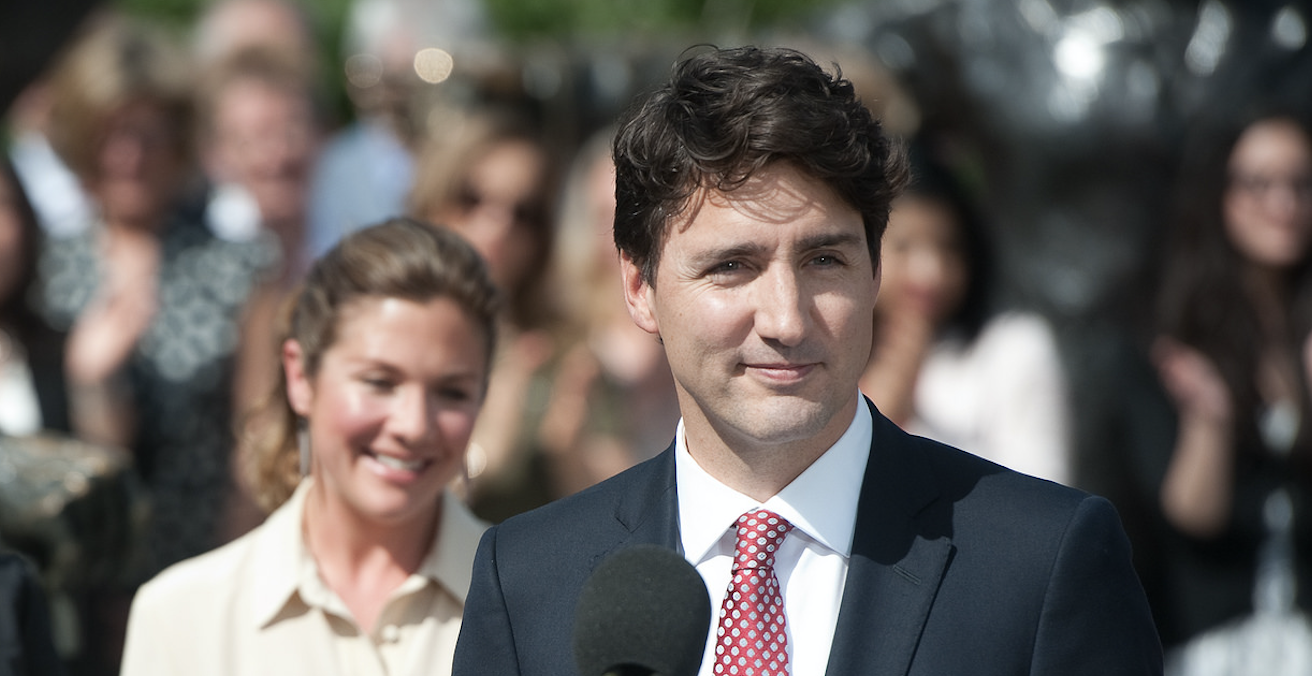
Another example of this argument is the electoral success of Canadian Prime Minister Justin Trudeau. In 2011, his party (“The Liberal Party”) was almost wiped off the political landscape (CBC, 2019). Yet because of Trudeau’s immense popularity with the electorate, he led the party from irrelevancy to winning a landslide election in 2015 (CBC, 2015).

(BBC News, 2015)

The Liberal Party’s policy platform did not change much from 2011 to 2015. However, the party ran with a candidate whose effortless charm resonated strongly with the Canadian voters.

(Mabley, 2o19)

ON-TARGET MESSAGING

ON-TARGET MESSAGING

Popularity is not the only way to achieve resonance with voters. If the core message of a political brand strikes a chord with the electorate, resonance may be achieved in spite of an unpopular candidate. The most obvious example of this is the election of President Donald Trump.

(Mystal, 2019)

Trump was largely unpopular prior to his election (Palmer, Bade and Bresnahan, 2016). Yet due to his unconventional and aptly-timed message of nationalism and isolationism, he was able to triumph over his political adversaries.

(The Business Times, 2016)

However, a prerequisite to Trump’s success was the salience of his brand (Keller, 2012). While Trump was not broadly loved, Americans knew who he was. So when he spoke, people listened. As such, his message had the opportunity to resonate with the public, which it did.

In the Australian context, Clive Palmer is attempting to replicate Trump’s message. It appears to be working. The projected primary vote of the UAP is surging in the battleground seats listed below.

(The Australian, 2019)

Palmer does not enjoy the same extent of celebrity status as Trump does in the US. He needs to build even more salience within the Australian body politic in order achieve greater resonance. Accordingly, he is deftly investing over $50 million in order to disseminate pervasive awareness of his political brand (McCutcheon, 2019).

REFERENCE LIST

BBC News. (2015). Canada’s Liberals sweep to power. [online] Available at: https://www.bbc.co.uk/news/world-us-canada-34578213 [Accessed 18 May 2019].

CBC. (2015). CBC News: Election 2015 roundup. [online] Available at: https://www.cbc.ca/news2/interactives/results-2015/ [Accessed 18 May 2019].

CBC. (2019). With 6 months to go, Justin Trudeau is up against history | CBC News. [online] Available at: https://www.cbc.ca/news/politics/grenier-trudeau-six-months-1.5102336 [Accessed 18 May 2019].

Keller, K. L. (2012). Strategic Brand Management. 4th ed. Boston: Pearson.

Mabley, B. (2019). Justin Trudeau and the SNC Lavalin Scandal in Canada – AIIA. [online] Australian Institute of International Affairs. Available at: https://www.internationalaffairs.org.au/australianoutlook/justin-trudeau-snc-lavalin-scandal-canada/ [Accessed 18 May 2019].

McCutcheon, P. (2019). Clive Palmer to spend $60 million on campaign advertising blitz, senator claims. [online] ABC News. Available at: https://www.abc.net.au/news/2019-04-29/clive-palmer-sixty-million-dollar-election-advertising-blitz/11053778 [Accessed 11 May 2019].

Mystal, E. (2019). How Does Donald Trump Keep Getting Away With It?. [online] The Nation. Available at: https://www.thenation.com/article/trump-threat-to-democracy/ [Accessed 18 May 2019].

Palmer, A., Bade, R. and Bresnahan, J. (2016). Poll: Trump’s popularity soars after election. [online] POLITICO. Available at: https://www.politico.com/story/2016/11/donald-trump-popular-poll-231694 [Accessed 18 May 2019].

Parker, B. (2012). Candidate Brand Equity Valuation: A Comparison of U.S. Presidential Candidates During the 2008 Primary Election Campaign. Journal of Political Marketing, 11(3), pp.208-230.

The Australian. (2019). newspoll | The Australian. [online] Available at: https://www.theaustralian.com.au/topics/newspoll [Accessed 18 May 2019].

The Business Times. (2016). Thumbs up for Trump. [online] Available at: https://www.businesstimes.com.sg/infographics/thumbs-up-for-trump [Accessed 18 May 2019].

The Courier Mail. (2018). ‘Palmer not making a political comeback, we promise’. [online] Available at: https://www.couriermail.com.au/news/queensland/queensland-government/clive-palmer-not-making-a-political-comeback-we-promise-spokesman-says/news-story/3169c6f17e5b89c6dcb6947a72b89453 [Accessed 18 May 2019].

Tutorial Week 9

MAYA BAY

This Vimeo clip (available at: https://vimeo.com/129286980), titled “Maya Bay Sleep Aboard” perfectly highlights the brand equity (Keller, 2012) embedded in Maya Bay.

Where is the Video Shot?

The landscape depicted in the above Vimeo clip is Maya Bay, a beach on Phi-Phi Le island in Krabi province, Thailand. It is perhaps best known for being the setting of the 2000 film “The Beach”, starring Leonardo Di Caprio.

The Beach (2000). Shown: Leonardo DiCaprio (as Richard)

Last week, the Thai National Parks Department confirmed that Maya Bay will remain closed until 2021, in order to rehabilitate the iconic locale after years of environmental degradation caused by over-tourism (ABC News, 2019).

Aerial view of Phi-Phi Leh island with Maya Bay and Pileh Lagoon (Source: Cripps, 2019).

The immense popularity of Maya Bay evinces the strong brand resonance the place has with tourists from around the world. But how does this resonance arise?

Places and Narratives

While places are by nature tangibly fixed products, they are “best understood in terms of narratives” (Warnaby & Medway, 2013: p. 358). The brand resonance of Maya Bay derives from the narrative surrounding the place. That is, put simply, Maya Bay is an untouched tropical paradise, isolated from the taint of industrialisation, overpopulation and modernity. Needless to say, this is a plot-point in the film “The Beach”.

The Vimeo clip “Maya Bay Sleep Aboard” is simply a rendition of this narrative from a small group of tourists that were fortunate enough to have the Bay to themselves. Using drone footage and time-lapse photography, the group effortlessly captures the isolation, beauty and tranquility of Maya Bay.

Narrative to Myth

This narrative behind Maya Bay may now be better described as a myth or legend. Since the release of “The Beach” in 2000, Maya Bay has been trampled and pillaged by hoards of inconsiderate tourists. The Thai government recognised the centrality of the myth of Maya Bay to the appeal of the place. That is why it forewent immense tourist revenues and closed the bay for two years in order to restore it to its former glory.

Tourists Spoiling the Allure of a Tropical Paradise.

Myth to Cautionary Tale?

Narratives are inherently dynamic and malleable (Warnaby & Medway, 2013: p. 358). Accordingly, if the stunning ecology of Maya Baya is not fastidiously preserved, then the myth of the place will transform into a cautionary tale. And I suspect that a cautionary tale will not contribute to the brand equity of Maya Bay!

Reference List:

ABC News. (2019). Want to visit the picturesque bay from The Beach? You’re out of luck until 2021. [online] Available at: https://www.abc.net.au/news/2019-05-10/thai-cove-from-leonardo-dicaprios-the-beach-closed-until-2021/11102464 [Accessed 12 May 2019].

Cripps, K. (2019). Thailand shuts ‘The Beach’ spot indefinitely. [online] CNN Travel. Available at: https://edition.cnn.com/travel/article/maya-bay-closure-thailand/index.html [Accessed 12 May 2019].

Keller, K. L. (2012). Strategic Brand Management. 4th ed. Boston: Pearson.

Warnaby, G. and Medway, D. (2013). What about the ‘place’ in place marketing? Marketing Theory, 13(3), pp.345-363.

The Reality Item

Introduction

This analysis argues that a low price does not necessarily entail a weak relationship between the brand and the consumer. Indeed, there are low-priced brands that have strong resonance with consumers, to the envy of luxury brands. Ona branded coffee sold through the Cupping Room is one such brand, and is the focus of this analysis.

One Large “Black Betty” Blend Flat White
Receipt of Purchase

Ritual Marketing

75% of Australians drink at least one cup of coffee per day (McCrindle, 2019). Accordingly, the ritual of coffee drinking is deeply ingrained in the national psyche.

By harnessing the psychological power of daily rituals (Rook, 1985), Ona builds resonance through encouraging behavioural loyalty in the form of regular, repeat purchases (Keller, 2012). Due to exorbitant pricing, luxury brands cannot encourage behavioural loyalty to the same extent, except amongst an elite minority of consumers.

Brand Personality: Excitement

Aaker demonstrated that excitement is the brand personality most strongly associated with coffee consumption (1996). Deftly, Ona capitalises on this brand personality to develop resonance with consumers. This approach is manifest in the bold and striking artwork adorning the walls of the Cupping Room, photographed below:

(Thecuppingroom.com.au, 2019)

By contrast, luxury brands may struggle to generate excitement with their offerings (Sung, Choi & Song, 2014: p. 129). This is because luxury brands frequently embody staid and snobby attitudes (Garfein, 1989).

Salespeople

The Cupping Room employees are educated, personable and passionate. Indeed, Ona is simply putting a Canberra spin on the business model developed by Howard Schultz: ‘in a Starbucks store, you encounter real people who are informed and excited about the coffee, and enthusiastic about the brand’ (1997: p. 247). The young and bubbly staff of the Cupping Room also contribute to the aforementioned brand personality of excitement, thereby reinforcing resonance with consumers.

The Cupping Room cafe manager Caity Reynolds (Reinfrank, 2016)

Luxury brands, on the other hand, generally employ rude and frigid salespeople. Surprisingly, this strategy successfully boosts sales, because the cold attitude of the salespeople pressures consumers into purchasing luxury goods in order to ‘prove a point’ (Ward & Dahl, 2014). However, this short-term sales tactic is not a recipe for a deep and long-lasting brand-consumer relationship (Phibbs, 2015). Accordingly, luxury brands may envy the ability of Ona to forge consumer resonance through engaging service without sacrificing sales.

(Sheridan, 2014)

Over-Exposure

Salience is a prerequisite to resonance: you cannot have a relationship with a brand if you do not know that it exists. Yet over‐exposure may negatively affect the prestige character of luxury brands (Dubois & Paternault, 1995), and consequently, their resonance with consumers (Rindfleisch, Wong & Burroughs, 2006). Therefore, luxury brands must carefully balance competing goals of brand salience and resonance (Hennigs et al, 2013).

Potential Overexposure?

For low-priced brands, salience and resonance are not negatively associated (ibid). As such, luxury brands may envy the resonance low-priced brands have with their consumers because it does not come at a cost to salience or growth.

Reference List:

Aaker, D. A. (1996). Building strong brands. New York: The Free Press.

Dubois, B. and Paternault, C. (1995). Observations: Understanding the world of international luxury brands: The “dream formula..” Journal of Advertising Research, 35(4), pp.69-76.

Garfein, R. (1989). Cross‐cultural Perspectives on the Dynamics of Prestige. Journal of Services Marketing, 3(3), pp.17-24.

Hennigs, N., Wiedmann, K., Behrens, S. and Klarmann, C. (2013). Unleashing the power of luxury: Antecedents of luxury brand perception and effects on luxury brand strength. Journal of Brand Management, 20(8), pp.705-715.

Keller, K. L. (2012). Strategic Brand Management. 4th ed. Boston: Pearson.

McCrindle. (2019). Australian Attitudes Towards Coffee. [online] Available at: https://mccrindle.com.au/insights/blogarchive/australian-attitudes-towards-coffee/ [Accessed 5 May 2019].

Phibbs, B. (2015). Luxury Retail Brands Should Never Be Rude…No Matter What The Survey Says. [online] Retaildoc.com. Available at: https://www.retaildoc.com/blog/luxury-retail-brands-should-never-be-rude-no-matter-survey [Accessed 6 May 2019].

Reinfrank, A. (2016). The Cupping Room cafe manager Caity Reynolds. [online] ABC News. Available at: https://www.abc.net.au/news/2016-01-03/cupping-room-cafe-manager-caity-reynolds/7065058 [Accessed 5 May 2019].

Rindfleisch, A., Wong, N. and Burroughs, J.E. (2006). Seeking certainty via brands: An examination of materialism and brand resonance. Association for Consumer Research.

Rook, D. (1985). The Ritual Dimension of Consumer Behavior. Journal of Consumer Research, 12(3), pp.251-264.

Schultz, Howard. (1997). Pour Your Heart Into It. New York: Hyperion.

Sheridan, P. (2014). Rude sales people can boost luxury sales. [online] CNNMoney. Available at: https://money.cnn.com/2014/05/15/news/companies/luxury-shopping-rude/index.html [Accessed 6 May 2019].

Sung, Y., Choi, S., Ahn, H. and Song, Y. (2014). Dimensions of Luxury Brand Personality: Scale Development and Validation. Psychology & Marketing, 32(1), pp.121-132.

Thecuppingroom.com.au. (2019). The Cupping Room. [online] Available at: https://www.thecuppingroom.com.au/ [Accessed 5 May 2019].

Ward, M. and Dahl, D. (2014). Should the Devil Sell Prada? Retail Rejection Increases Aspiring Consumers’ Desire for the Brand. Journal of Consumer Research, 41(3), pp.590-609.


Mini Evidence Analysis #2

INTRODUCTION

This analysis argues that despite Spotify’s free basic offering, it can build Consumer-Based Brand Equity (CBBE) (Keller, 2012) as effectively as QANTAS, one of Australia’s most trusted brands (Rose, 2019).

(Keller, 2012)

THE COST OF “FREE”

Marketing orthodoxy holds that price discounting negatively impacts brand equity (Villarejo-Ramos & Sánchez-Franco, 2005). But Spotify’s free basic offering does not seem to dissuade consumers from subscribing. Indeed, hit its 100th million paid subscriber in the past week (Jolly & Sweney, 2019). Therefore, if Spotify’s free basic offering is harming its brand equity, other aspects of its brand strategy are successfully compensating for this. But how?

Spotify’s subscriber growth compared to its chief competitor, Apple Music
(Richter, 2019)

CBBE FRAMEWORK

Brand Salience

Spotify is aggressively promoting recognition and awareness of its brand. Its free basic offering is the most obvious example. Furthermore, Spotify contracted with Samsung to pre-install the app on their phones (Jolly & Sweney, 2019), thereby promoting the brand to every Samsung purchaser.

Spotify Founder Daniel Ek announcing the partnership between the tech giants
(Gartenberg, 2018)

Brand Meaning

Spotify delivers performance by reliably streaming a vast library of music with high sound quality (Goode, 2019). By embracing a bright, flashy and bold colour scheme, Spotify curates unique and appealing imagery (Pantelić, 2015). Through these avenues, Spotify competently delivers brand meaning.

Examples of Spotify’s striking aesthetic
(Pantelić, 2015)

Brand Response

In 2016 the app crashed, but Spotify immediately acknowledged customers’ concerns across all channels and engaged with them long after the app was fixed (Beuly, 2016). Spotify even complied bespoke playlists for affected customers (Skinbjerg, 2016), leading to this tweet of delight:

“I’m genuinely speechless@SpotifyCares. Never have I ever met such an amazing (human) support team. You’ve got me hooked for life. Cheers!”

Sophia Skinbjerg (@sophiaskinbjergJune 26, 2016

This is a perfect example of the Service Recovery Paradox (Krishna, Dangayach & Sharma, 2014) in action. Such deft crisis management inspired consumer judgements of credibility and consideration. Moreover, Spotify’s tailored replies evinced consumers’ feelings warmth, fun and excitement towards the brand.

Resonance

Spotify resonates with consumers because it fosters active engagement. 55% of Spotify subscribers connect to the app through Facebook (Fowler, 2016), which bests QANTAS’s social media engagement (Talkwalker, 2019). Spotify encourages its users to collaboratively build playlists via Facebook Messenger group chats (McCormick, 2017).

(McCormick, 2017)

Spotify collects its users’ data and leverages it to improve playlists, recommendations and special offers (Beuly, 2016). Spotify develops meaningful relationships with consumers so effectively because it knows what makes them tick. Similarly, QANTAS has had success in leveraging consumer data from its Frequent Flyer program (Cameron, 2017).

CONCLUSION

Spotify’s free basic offering builds brand salience. Spotify then capitalises on this salience by engaging with consumers on a meaningful level, thereby resonating with them. This analysis shows that Spotify can and does build CBBE as effectively as QANTAS, despite the orthodox hostility towards the use of discounting to develop brand equity.

Reference List:

Beuly, C. (2016). The Key To Spotify’s Brand Relevance: Customer Obsession. [online] Prophet.com. Available at: https://www.prophet.com/2016/07/key-to-spotifys-brand-relevance/ [Accessed 4 May 2019].

Cameron, N. (2017). Qantas reports solid financials; highlights customer data and digital as competitive advantage. [online] Cmo.com.au. Available at: https://www.cmo.com.au/article/614712/qantas-reports-solid-financials-highlights-customer-data-digital-competitive-advantage/ [Accessed 4 May 2019].

Fowler, L. (2016). 5 Things Spotify Can Teach You About Content Curation – ScribbleLive. [online] ScribbleLive. Available at: https://www.scribblelive.com/blog/2016/02/08/5-things-spotify-can-teach-content-curation/ [Accessed 4 May 2019].

Gartenberg, C. (2018). Samsung is partnering with Spotify across its devices. [online] The Verge. Available at: https://www.theverge.com/2018/8/9/17671162/samsung-spotify-bixby-home-speaker-hardware-devices-galaxy [Accessed 4 May 2019].

Goode, L. (2019). Tips for Getting the Most Out of Your Spotify Experience. [online] WIRED. Available at: https://www.wired.com/story/spotify-tips-and-tricks/ [Accessed 4 May 2019].

Jolly, J. and Sweney, M. (2019). Spotify reaches 100m paying subscribers worldwide. [online] The Guardian. Available at: https://www.theguardian.com/technology/2019/apr/29/spotify-paying-subscribers-streaming-us-canada [Accessed 4 May 2019].

Keller, K. L. (2012). Strategic Brand Management. 4th ed. Boston: Pearson.

Krishna, A., Dangayach, G. and Sharma, S. (2014). Service Recovery Paradox: The Success Parameters. Global Business Review, 15(2), pp.263-277.

Lowery, D. (2018). Spotify Is Deeply Integrated With Facebook: How Safe is Your Streaming Data?. [online] The Trichordist. Available at: https://thetrichordist.com/2018/03/26/spotify-is-deeply-integrated-with-facebook-how-safe-is-your-streaming-data/ [Accessed 6 May 2019].

McCormick, R. (2017). Now you can build shared Spotify playlists with your friends in Facebook Messenger. [online] The Verge. Available at: https://www.theverge.com/2017/6/21/15844838/spotify-shared-playlists-facebook-messenger [Accessed 6 May 2019].

Pantelić, T. (2015). Spotify Presents a New Brand Identity Targeting Millennials | Brandingmag. [online] Brandingmag. Available at: https://www.brandingmag.com/2015/03/19/spotify-presents-a-new-brand-identity-targeting-millennials/ [Accessed 4 May 2019].

Richter, F. (2019). Infographic: Spotify Is Pulling Away From Apple Music. [online] Statista Infographics. Available at: https://www.statista.com/chart/8399/spotify-apple-music-paid-subscribers/ [Accessed 4 May 2019].

Rose, D. (2019). Australia’s most-trusted brand isn’t Australian. [online] Australian Financial Review. Available at: https://www.afr.com/business/media-and-marketing/public-relations/australia-s-most-trusted-brand-isn-t-australian-20190417-p51ewx [Accessed 4 May 2019].

Skinbjerg, S. (2016). A lesson in exceptional customer experience | Ungapped. [online] Ungapped. Available at: https://ungapped.com/a-lesson-in-exceptional-customer-experience/ [Accessed 4 May 2019].

Talkwalker (2019). Social media analytics for Qantas. [online] Available at: https://www.talkwalker.com/industry-research/airlines/qantas-social-media-analytics [Accessed 4 May 2019].

Villarejo-Ramos, A. and Sánchez-Franco, M. (2005). The impact of marketing communication and price promotion on brand equity. Journal of Brand Management, 12(6), pp.431-444.

Thursday Week 8

Canberra Bus Stops:

Introduction:

Canberra bus stops are iconic, yet understated, works of functional art (Gee, 2016). They seem to defy categorisation: not modern, but nowhere near traditional. Art-deco with an austere flavour meets sixties science fiction a la 2001: A Space Odyssey. To my mind, they almost resemble the German bunkers on the beaches of Normandy from Saving Private Ryan.

Saving Private Ryan (1998)

Canberra bus stops are fruit ripe for picking by local brands hungry for cheap leverage. However, one danger a brand may face in associating itself with Canberra but stops is that they may not resonate with out-of-towners.

Successful Leveraging:

Canberrans are different from other Australians. They are better educated, more cultured and more environmentally conscious. Of course, this is a generalisation, but nonetheless has an element of truth to it.

Woah Man

Art and marketing are linked at the hip (Fillis & Renschler, 2005: p. 284). Therefore, by associating a brand with an object of artistic beauty, the brand stands to develop a deeper personal relationship with consumers, provided that the consumers recognise the artistic merit of the object in question. This is because such objects stimulate the curiosity of the consumer and appeal to their creativity (Schmitt, 1999) .

Now This Is Meta

The erudite citizens of Canberra are the perfect targets for brands seeking to leverage Canberra bus stops. This is because Canberrans are not only familiar with the bus stops, but are also more likely to recognise their quirky aesthetic. Consequently, Canberrans will likely resonate (Keller, 2012) with brands leveraging the bus stops.

Say Cheese

One idea might be for an environmentally conscious clothing brand (e.g. Patagonia) to offer a modest discount on a particular product to consumers who take a selfie at a Canberra bus stop and share it on social media to broadcast the environmental consciousness shared between themselves and the brand. This generates cheap exposure, but that is the incident, not the prize. Such a promotion, by highlighting common ground, develops a genuine relationship between consumers and the brand.

#Discounts

A Danger: STAY IN YO LANE

If a brand attempts to leverage Canberra bus stops to build relationships with consumers outside the ACT, I doubt its will have success. Marketing communication must be clear in order for brands to foster meaningful relationships with consumers. Hokey gimmicks and trend-hopping just doesn’t work. One need only look to the Kendall Jenner/Pepsi scandal to demonstrate this truism.

Why Kendall Why?

So even if a non-Canberran sees the selfie promotion and has a positive reaction, they might think “oh that’s cool I guess” and forget about it five minutes later. The promotion will not foster resonance because the non-Canberran will not anchor the bus stop to a deep sense of local pride.

Instructions Unclear: Bus Stop Broken

Reference List:

Fillis, I. and Rentschler, R. (2005). Using creativity to achieve an entrepreneurial future for arts marketing. International Journal of Nonprofit and Voluntary Sector Marketing, 10(4), pp.275-287.

Gee, S. (2016). Are Canberra’s iconic bus shelters found anywhere else in the world?. [online] ABC News. Available at: https://www.abc.net.au/news/specials/curious-canberra/2016-08-08/canberras-iconic-bus-shelters-are-there-others-like-it/7681568 [Accessed 2 May 2019].

Keller, K. L. (2012). Strategic Brand Management. 4th ed. Boston: Pearson.

Schmitt, B. H. (1999). Experiential marketing. Journal of Marketing, 15(1), pp.53-54.

Weeks 5 and 6 Tutorials – The Combo Deal

QUESTION 2

A brand that employs discounting enjoys benefits. For example, discounting may successfully induce trial behaviour in consumers, potentially leading to brand resonance with those consumers. However, over-reliance of discounting strategies may entail perilous consequences. In particular, brands should avoid targeting heavy discounts at consumers unfamiliar with the brand. Furthermore, brands should avoid offering heavy discounts to consumers familiar with the brand on a recurrent basis.

How is Heavy Discounting Beneficial?

Discounting is an effective technique for inducing trial behaviour (Quester et al, 2014: p. 351). Trial behaviour often leads to the consumer resonating with the consumed brand (ibid). Consequently, discounting may be used to convert a consumer from a competitor’s brand to your own, thereby increasing market share. But this may come at a cost, and not just a financial one.

What are the Dangers of Heavy Discounting?

Unfamiliar Brands:

Ground-breaking research has found that for brands unfamiliar to the consumer, the resonance of a discounted brand with consumers does not continue to increase as the size of the discount increases (Moore & Olshavsky, 1989: p. 192). This bucks traditional economic thinking (ibid), which holds that if two goods are identical, the consumer will prefer the lower priced good. 

Moore & Olshavsky’s findings indirectly suggest that consumers make causal inferences regarding the reasons why a particular brand is discounted heavily (1989: p. 193). Such a reason may include poor quality, and a perception of poor quality in turn undermines resonance. Therefore, a brand strategy of heavy discounting risks sacrificing sales revenue for a non-corresponding gain, or potentially a loss, of brand resonance with unfamiliar consumers.

Familiar Brands:

The resonance of a familiar brand with consumers continues to increase with the size of the discount (ibid). However, recurrent heavy discounting of familiar brands may cause consumers to infer negative attributions regarding the reasons for the frequency of the heavy discounts (ibid; Lichtenstein & Bearden, 1988). So, in effect, repeated heavy discounts to a familiar brand erodes the consumer’s built-up resonance with the brand.

Conclusion:

From a brand strategy perspective, marketers should avoid heavily discounting a brand to consumers unfamiliar with the brand. This may arouse consumer suspicion towards the brand, and potentially result in reduced resonance.

Marketers should engage in heavy discounting of brands familiar to consumers in order to promote brand resonance with those consumers. However, this strategy should only be employed on a sporadic and as-needed basis. If consumers notice a pattern of recurring heavy discounts, the brand’s resonance with them may dissipate.

QUESTION 3

Experiential marketing is directly connected with consumer behaviour theory. To illustrate this point, this post investigates the close connection between experiential marketing and physical surroundings, in addition to that of experiential retailing and atmospherics.

Experiential Marketing and Physical Surroundings:

Experiential marketing is intimately linked to the marketing of the places those experiences occur. Indeed, physical surroundings are uncontroversially recognised as a type of situational influence (Quester et al, 2014: p. 42). For example, the environment in which a sporting event takes place evinces the primary emotional reactions of pleasure, arousal and dominance from consumers (Uhrich & Koenigstorfer 2009).

Not only are experiences strongly influenced by their physical surroundings, but physical surroundings are also influenced by experiences. For example, large-scale sporting events, such as the Sydney to Hobart Yacht Race, inspire broader interest in the cities of Sydney and Hobart as tourist destinations in their own right (Armstrong et al 2015, p. 208).

These examples demonstrate that experiential marketing and physical surroundings are linked at the hip. Consequently, experiential marketing is directly connected with consumer behaviour theory.

Experiential Retailing and Atmospherics:

A subset of experiential marketing is experiential retailing. Experiential retailing is the use of atmospherics by retailers to differentiate their shops from those of competitors (Armstrong et al 2015, p. 326). For instance, Nike transformed their retail outlets into ‘theatres of the mind’ that engulf their customers with a unique and intriguing shopping environment (ibid).

Alternatively, experiential retailing may be conceived as the application of the ‘servicescapes’ framework developed by Mary Jo Bitner (1992) in the retail context. Servicescapes employ colour, music, temperature, lighting and more to craft an atmosphere that affects the behaviour of consumers (Hooper et al, 2013). Thus, we see that consumer behaviour is directly connected with experiential retailing, and by extension, experiential marketing. 

The servicescapes framework is in no way limited to atmospherics at physical outlets. For example, internet retailers employ atmospherics through the use of graphics, layout, colours, tone, content, entertainment features and the like (Quester et al, 2014: p. 170). Indeed, the aesthetics of an online shop are crucial for the creation of a pleasant shopping experience for consumers, which in turn drives sales (Wang et al 2011). Therefore, we see that the link between consumer behaviour theory and experiential marketing transcends the physical realm.

Reference List:

Armstrong, G., Adam, S., Denize, S. & Kotler, P. (2015). Principles of Marketing. 6th edn. Pearson, Melbourne.

Bitner, M. (1992). Servicescapes: The Impact of Physical Surroundings on Customers and Employees. Journal of Marketing, 56(2), p.57.

Hooper, D., Coughlan, J. and R. Mullen, M. (2013). The servicescape as an antecedent to service quality and behavioral intentions. Journal of Services Marketing, 27(4), pp.271-280.

Lichtenstein, D. and Bearden, W. (1989). Contextual Influences on Perceptions of Merchant-Supplied Reference Prices. Journal of Consumer Research, 16(1), p.55.

Moore, D. and Olshavsky, R. (1989). Brand choice and deep price discounts. Psychology and Marketing, 6(3), pp.181-196.

Quester, P., Pettigrew, S., Kopanidis, F., Rao Hill, S. & Hawkins, D.I. (2014). Consumer Behaviour. McGraw-Hill Australia, North Ryde.

Uhrich, S. and Koenigstorfer, J. (2009). Effects of atmosphere at major sports events: a perspective from environmental psychology. International Journal of Sports Marketing and Sponsorship, 10(4), pp.56-75.

Wang, Y., Minor, M. and Wei, J. (2011). Aesthetics and the online shopping environment: Understanding consumer responses. Journal of Retailing, 87(1), pp.46-58.

Mini Evidence Analysis #1

With the recent announcement of nationwide store closures (Lannin, 2019), BIG W’s geographic footprint is shrinking fast, and with it, the equity underpinning its brand. However, by updating its brand name and logo, the retailer may recapture its lost brand equity.

Defining Key Terms

Brand equity is the measure of the influence that the brand name has over the consumer’s response to marketing efforts (Armstrong et al, 2015: p. 222). Brand identity is the unique configuration of brand associations that the brand strategy strives to create and maintain (Aaker, 1996). Brand image is the interpretation of brand identity by consumers (Kapferer, 2008).

Constituents of Brand Equity (MBA Skool, 2019)

The Centrality of Brand Identity

Increasingly, brand identity is considered the central constituent to brand equity (Burmann, Jost-Benz & Riley, 2009). Indeed, brand identity serves as the foundation of Keller’s Brand Equity Model (2012). This analysis will proceed through the lens of brand identity.

(Keller, 2012)

What was BIG W’s Brand Equity?

BIG W adopted the brand identity of “size and scope” because it created a brand image of convenience. Consumers equated the wide geographic footprint, physical size and varied inventory of BIG W with the ease of “one-stop shopping” close to home (Seiders, Berry & Gresham, 2000). In turn, BIG W derived its brand equity from this brand image of convenience: consumers readily responded to BIG W’s marketing efforts because they perceived it to be a more convenient place to shop than other retailers. However, this brand equity has not survived to the present day.

The first BIG W store in Tamworth, NSW (Woolworths Group, 2019)

How Do Store Closures Affect BIG W’s Brand Equity?

The announcement of store closures communicates to consumers that BIG W’s geographic presence is contracting. With fewer locations, it is less convenient for consumers to shop at BIG W. Thus, BIG W’s brand identity of “size and scope” rings hollow, and no longer projects the brand image of convenience. This confuses consumers and undermines BIG W’s brand equity.

A Closed BIG W Shop

Recapturing Lost Brand Equity

I propose that the BIG W should update its name and logo. To begin, the retailer should ditch the “BIG” and become “NewW“, thereby re-calibrating its brand identity away from size and towards innovation.

Current Name & Logo
(BIG W, 2019)
Proposed Name & Logo

BIG W has a history of innovation, being the second retailer retailer in Australia to trial self-checkout machines (NCR Australia, 2003). BIG W has shrewdly capitalised on the surging demand for affordable homewares (Fact.MR, 2017), with its new furniture range being lauded for its trendiness (Bartels, 2019).

The proposed name and logo change will update the retailer’s brand identity to reflect its forward-thinking ethos. Consumers will correctly perceive NewW as an innovative retailer, its brand synonymous with trendy merchandise. Consequently, its brand identity will match its brand image, remedying customer confusion and resulting in a boost to brand equity.

Reference List:

Aaker, D.A. (1996). Building Strong Brands. London: Simon & Schuster, Free Press.

Armstrong, G., Adam, S., Denize, S. & Kotler, P. (2015). Principles of Marketing. 6th edn. Pearson, Melbourne.

Bartels, K. (2019). BIG W launches new on-trend homewares range starting at $9. [online] Domain. Available at: https://www.domain.com.au/living/big-w-launches-on-trend-homewares-range-829243/ [Accessed 21 Apr. 2019].

BIG W. (2019). BIG W | Australia’s Lowest Prices Everyday. [online] Available at: https://www.bigw.com.au/ [Accessed 22 Apr. 2019].

Burmann, C., Jost-Benz, M. and Riley, N. (2009). Towards an identity-based brand equity model. Journal of Business Research, 62(3), pp.390-397.

Fact.MR (2017). Homewares Market Forecast, Trend Analysis & Competition Tracking. Global Market insights 2017 to 2022. Fact.MR.

Kapferer J.-N. (2008). The New Strategic Brand Management, Creating and Sustaining Brand Equity Long Term. London: Kogan Page.

Keller, K. L. (2012). Strategic Brand Management. 4th ed. Boston: Pearson.

Lannin, S. (2019). Woolworths to shut 30 of its Big W stores amid retail gloom. [online] ABC News. Available at: https://www.abc.net.au/news/2019-04-01/woolworths-to-shut-30-of-big-its-w-stores-over-next-three-years/10958700 [Accessed 21 Apr. 2019].

MBA Skool. (2019). Brand Equity Definition | Marketing Dictionary | MBA Skool-Study.Learn.Share.. [online] Available at: https://www.mbaskool.com/business-concepts/marketing-and-strategy-terms/1860-brand-equity.html [Accessed 21 Apr. 2019].

NCR Australia (2003). Press Release: BIG W to begin Self-Checkout trial in two stores to improve customer service. [online] Prwire.com.au. Available at: https://prwire.com.au/pr/6868/big-w-to-begin-self-checkout-trial-in-two-stores-to-improve-customer-service [Accessed 21 Apr. 2019].

Seiders, K., Berry, L. and Gresham, L. (2000). Attention, Retailers! How Convenient Is Your Convenience Strategy?. Sloan Management Review, 41(3), pp.79-86.

Woolworths Group (2019). The Woolworths Story. Available at: https://www.woolworthsgroup.com.au/page/about-us/The_Woolworths_Story/How_We_Were_Founded [Accessed 21 Apr. 2019].

Freddo Frog

Freddo Frog, both as an illustration on the package and as moulded chocolate

Freddo Frog is an anthropomorphic cartoon frog owned by the parent brand Cadbury. Freddo is a venerable marketing device in Australia, first conceived in 1930 and surviving to this very day.

The first rendition of Freddo Frog (1930)

Being 89 years old, Freddo Frog has withstood the test of time. This is because Freddo Frog continues to add brand equity to Cadbudy. But how can this claim be supported? In the spirit of evidence-based marketing (Lewis, 2018), the writer proposes that numbers be crunched.

A crude, yet effective, metric to quantify brand equity is the consumer’s willingness to pay a price premium (Netemeyer, 2004: p. 210). By investigating consumers’ willingness to pay for Freddo Frogs, one may approximate the brand equity contributed to Cadbury by Freddo Frog.

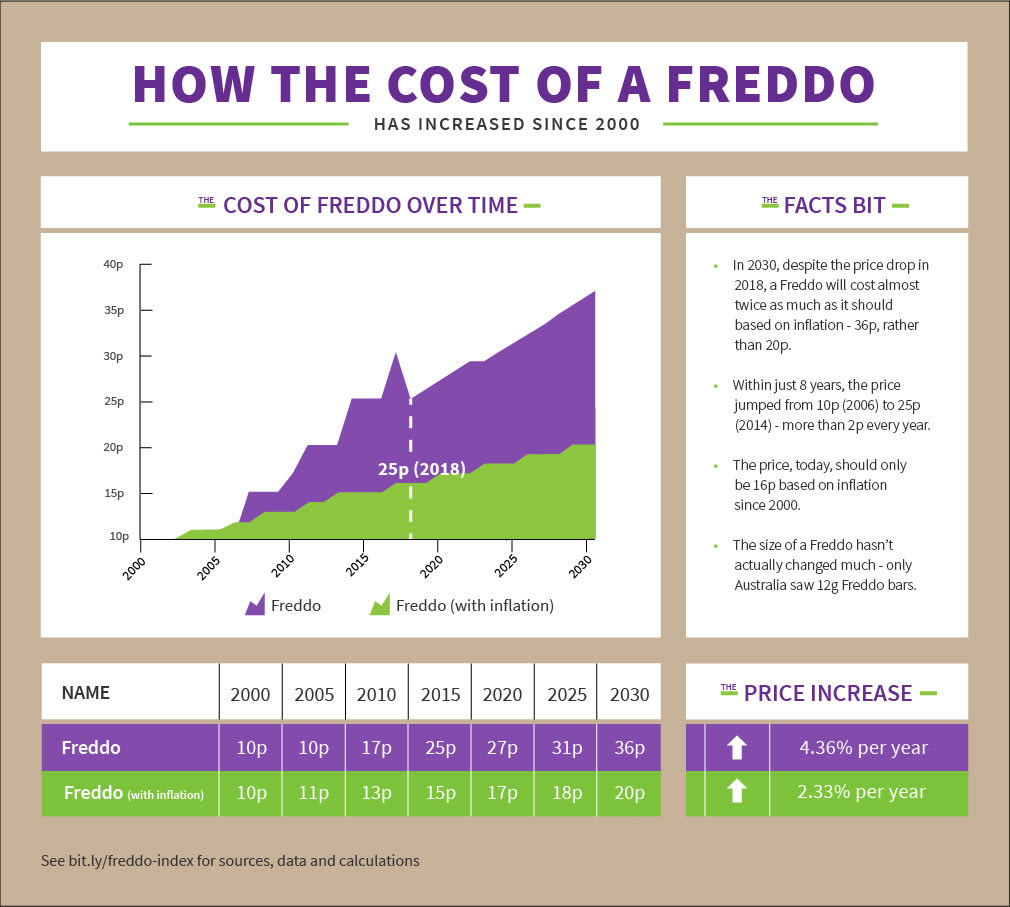
The graphic below demonstrates that the price of Freddo Frog branded chocolate has markedly outpaced inflation over the past decade (note: this data was collected from the UK market). This implies that consumers are willing to tolerate price increases for Freddo Frog chocolate to a greater extent that the average product. Furthermore, this trend is projected to continue over the next decade.

Invitation Ltd, 2018

However, in the interests methodological soundness, the brand equity generated by Freddo Frog should be ascertained with respect to competing brands in the confectionery industry.

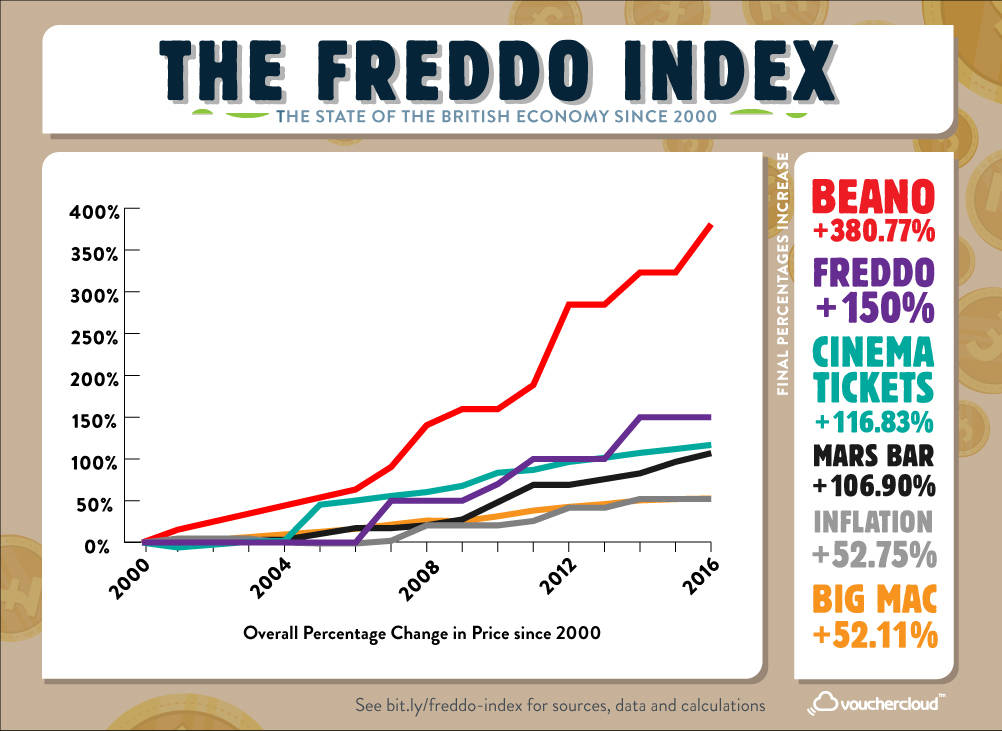
The graphic below demonstrates that the price of Freddo Frog chocolate has not only outpaced inflation, but also the competing product Mars bars by 43.1%. Plausibly, the brand equity created by Freddo Frog character is responsible, at least in part, for the superior market power the frog enjoys relative to its competitor.

The Freddo Index
Invitation Ltd, 2018

In Australia, Freddo Frogs have similarly increased in price over the past few years (Watkins, 2017). However, the Australian Freddo Frogs have decreased in net weight by almost half (ibid). Therefore, the price of Freddo Frogs per gram has more than doubled in this period.

The Freddo Frog character clearly enhances the ability for Cadbury to charge more for its chocolate, both domestically and overseas. But how?

Simple designs have been proven to be effective for other cartoon brand agents (Hosany et al, 2013: p. 52; 56). Freddo has a simple design, and has no “lore” or “world-building” supporting his character. There is no backstory that consumers need be cognisant of for him to be appealing. Due to Freddo Frog’s simplicity, it is difficult for competitors to field counterfeits.

Further, Freddo Frog capitalises on nostalgia of consumers (Watkins, 2017). Particular items in one’s life may evoke a formidable sense of the past (Belk, 1991). In my personal experience, I have many fond memories being treated to and rewarded with Freddo Frogs. As such, I continue to purchase the frogs today, especially if I am feeling blue.

Going forward, the brand equity generated by Freddo Frog may become less potent. The medical community is harshly critical of the use of cartoon media characters to market unhealthy foods to children. In their eyes, this is a contributing factor to the obesity epidemic (Kraak and Story, 2014)). Yet as it stands today, Freddo Frog’s magnetic allure is rewarding Cadbury’s shareholders handsomely.

References:

Belk, R. (1991). Highways and Buyways. Provo, UT: Association for Consumer Research.

Hosany, S., Prayag, G., Martin, D. and Lee, W. (2013). Theory and strategies of anthropomorphic brand characters from Peter Rabbit, Mickey Mouse, and Ronald McDonald, to Hello Kitty. Journal of Marketing Management, 29(1-2), pp.48-68.

Invitation Ltd. (2018). The Freddo Index – The History of Freddo Prices Since 2000. [online] vouchercloud. Available at: https://www.vouchercloud.com/resources/the-freddo-index [Accessed 27 Mar. 2019].

Kraak, V. and Story, M. (2014). Influence of food companies’ brand mascots and entertainment companies’ cartoon media characters on children’s diet and health: a systematic review and research needs. Obesity Reviews, 16(2), pp.107-126.

Lewis, C. (2018). We need evidence-based marketing to save us from the fads and fashions. [online] Marketing Week. Available at: https://www.marketingweek.com/2018/05/09/colin-lewis-evidence-based-marketing/ [Accessed 27 Mar. 2019].

Netemeyer, R., Krishnan, B., Pullig, C., Wang, G., Yagci, M., Dean, D., Ricks, J. and Wirth, F. (2004). Developing and validating measures of facets of customer-based brand equity. Journal of Business Research, 57(2), pp.209-224.

Watkins, J. (2017). How Australia’s Willy Wonka Created Britain’s Most Controversial Candy. [online] OZY. Available at: https://www.ozy.com/flashback/how-australias-willy-wonka-created-britains-most-controversial-candy/81844 [Accessed 27 Mar. 2019].

The Common Item

SIR RICHARD BRANSON: THE MASTER OF PERSONAL BRANDING

Sir Richard Branson’s personal brand is the epitome of a good brand story. It showcases the triumph of an underdog over entrenched business interests. By choreographing outlandish publicity stunts, Branson injects humour and lightheartedness into this narrative, thereby making it more appealing to the general public. However, the biggest threat to Branson’s story is the growing perception that he is no longer an underdog. Indeed, many claim that he has become one of the fat cats he once nobly crusaded against. In other words, Branson may be a victim of his own success.

What is Richard Branson’s Brand Story?

Branson was born in London to a prominent legal family. In his early years, he struggled academically as he suffered from dyslexia (Branson, 1999). At the age of 16, he founded his first successful venture: Student Magazine (ibid).

Young Richard Branson

Branson funnelled the profits from his magazine into a record shop and a recording studio, thereby creating Virgin Records (Biography.com Editors, 2019). The cheekiness of this name was avant-garde at the time, and embodied the counter-cultural spirit of the brand.

Virgin Records audaciously signed controversial bands, such as the Sex Pistols, who other labels shied away from (ibid). This risky strategy paid off, and Virgin Records went on to become the largest independent record label worldwide (Entrepreneur, 2008). This tremendous success was achieved due to Branson’s willingness to buck commercial norms.

The Sex Pistols

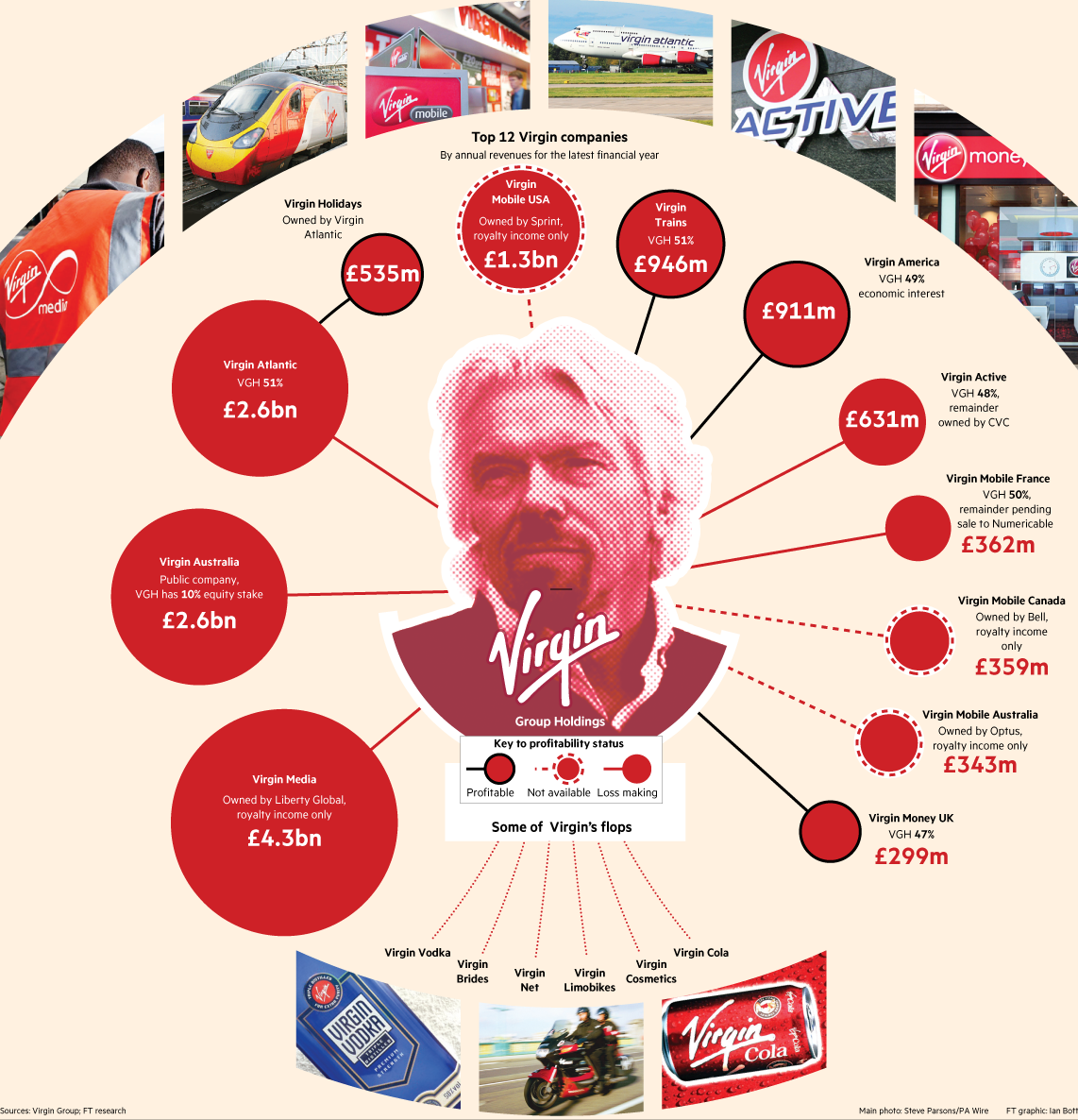
Branson continued his success by disrupting the airline industries in Australia and around the world (Zeveloff, 2011). Yet many of Branson’s ventures flopped, and by 1992, his airline was on the brink of insolvency (Biography.com Editors, 2019). While Virgin has since rebounded, Branson’s notable failures impart relatability and a touch of humanity to his personal brand.

In recent years, Branson has turned his attention to the space tourism (Zeveloff, 2011) and hyper loop transportation (Jenkins, 2017) industries. This adds to the public perception of Branson as a visionary and innovator.

Branson’s life story is analogous to the parable of David and Goliath (Schurenberg, 2013). He went from a dyslexic high school dropout to multi-billionaire. And he pulled it off by saving consumers money and making them smile.

David and Goliath

Why Does Richard Branson’s Brand Story Resonate?

One may view Branson’s personal brand through the lens of Keller’s Customer-Based Brand Equity Model (2012).

The CBBE Model

Branson creates brand salience by doing business across a vast array of industries. In doing so, Branson develops a broad awareness of his personal brand across various demographics. Virgin has 97% brand recognition in Australia (Virgin 2019), and as the face of the brand, Branson is likely not far behind.

Branson creates brand meaning by communicating performance and imagery. Branson performs through entering noncompetitive industries and undercutting established players without compromising quality (Kiss, 2007).

Equally important is the image that Branson presents to the world. He maintains a peculiarly dishevelled appearance for a billionaire, and is always photographed grinning. This evinces a point of difference with respect to the stereotype of the snobby, clean-cut corporate “suit”.

Branson is the master of eliciting positive responses to his personal brand. He does this through coordinating elaborate publicity stunts. These stunts evoke feelings of warmth, fun and excitement in onlookers. The media broadcasts Branson’s stunts widely, as they are beloved by the masses. Branson skilfully leverages the media to generate favourable coverage of his personal brand.

Branson riding a tank to promote Virgin Cola

Branson’s personal brand resonates with consumers by driving active engagement. For example, Branson is the most followed professional on LinkedIn (Reed, 2017). He is not courting consumers, rather they are courting him. Note that Branson’s personal LinkedIn page has over 100 times the followers than any Virgin page (Reed, 2017). Therefore, Branson’s personal brand eclipses that of Virgin. Virgin is merely an agent which transforms Branson’s personal brand into tangible products and services.

Branson’s LinkedIn Page: https://www.linkedin.com/in/rbranson

Customers feel an attitudinal attachment to Branson’s personal brand, and by extension, Virgin. This enables Branson to charge businesses around the world top dollar for the license to use the Virgin brand name (Gordon, 2014). This is yet another testament to the resonance of Branson’s personal brand with consumers.

Additionally, the appeal of Branson’s personal brand may be understood through Aaker’s Brand Personality Framework (1997, p. 352). The brand embodies sincerity and excitement, but also incorporates elements of competence, sophistication and ruggedness.

Is Richard Branson Becoming a Victim of His Own Success?

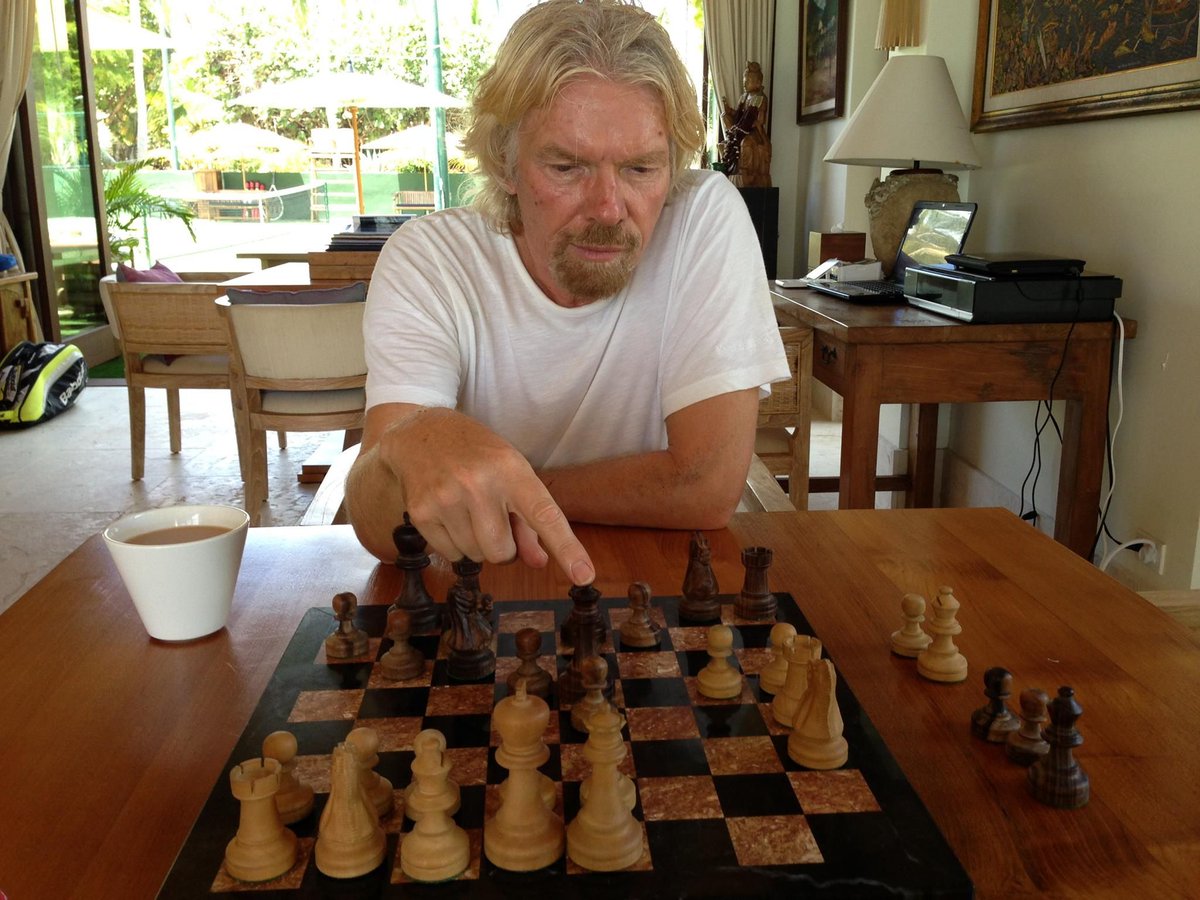
While Branson has been a media darling for decades, his swashbuckling persona has recently come under fire. Critics allege that Branson is inauthentic. A few weeks ago, Branson posted a photo of himself playing chess to his blog, while proclaiming his love for the game (Watson, 2019). Detractors gleefully announced that Branson had set up the board incorrectly (ibid).

Branson is a vocal climate change advocate (Boje and Smith, 2010: p. 26), but does not shy away from private jet travel (Moore, 2014). Despite preaching that responsibility comes with wealth (ibid), he resides in a tax haven (Metcalf and Stupples, 2019). His penchant for using women as props in his stunts (Moore, 2014) is anachronistic in the #MeToo era. Branson is mutating into an unscrupulous business magnate, just without the necktie.

If the public embraces these criticisms, Branson’s personal brand is jeopardised, and with it the Virgin empire. At a time of soaring wealth inequality, public relations management for billionaires has never been more difficult.

(Oxfam International, 2015)

Yet Branson has faced countless challenges in the past, and assiduously bounced back. So history is on his side. But all good things must come to an end, and one day Branson’s magnetic personal brand will fade into obscurity.

Reference List:

Aaker, J. L. (1997). Dimensions of Brand Personality. Journal of Marketing Research, 34(3), pp.347-356.

Biography.com Editors (2019). Richard Branson Biography. [online] The Biography.com website. Available at: https://www.biography.com/people/richard-branson-9224520 [Accessed 24 Mar. 2019].

Boje, D. and Smith, R. (2010). Re‐storying and visualizing the changing entrepreneurial identities of Bill Gates and Richard Branson. Culture and Organization, 16(4), pp.307-331.

Branson, R. (1999). Losing My Virginity: How I’ve Survived, Had Fun, and Made a Fortune Doing Business My Way. New York: Crown Business.

Entrepreneur. (2008). Richard Branson: the PT Barnum of British Business. [online] Available at: https://www.entrepreneur.com/article/197616 [Accessed 24 Mar. 2019].

Gordon, S. (2014). Virgin group: Brand it like Branson | Financial Times. [online] ft.com. Available at: https://www.ft.com/content/4d4fb05e-64cd-11e4-bb43-00144feabdc0 [Accessed 17 Mar. 2019].

Jenkins, A. (2017). http://fortune.com. [online] Fortune. Available at: http://fortune.com/2017/10/12/hyperloop-one-virgin-group-richard-branson/ [Accessed 24 Mar. 2019].

Keller, K. L. (2012). Strategic Brand Management. 4th ed. Boston: Pearson.

Kiss, J. (2007). Virgin Media sports package to undercut Sky. [online] the Guardian. Available at: https://www.theguardian.com/media/2007/feb/15/bskyb.broadcasting [Accessed 24 Mar. 2019].

Metcalf, T. and Stupples, B. (2019). Bloomberg – Are you a robot?. [online] Bloomberg.com. Available at: https://www.bloomberg.com/news/articles/2019-02-20/billionaire-brexiteer-leads-ranks-of-u-k-s-footloose-fortunes [Accessed 24 Mar. 2019].

Moore, S. (2014). Branson: Behind the Mask by Tom Bower – review. [online] the Guardian. Available at: https://www.theguardian.com/books/2014/feb/12/branson-behind-mask-tom-bower-review [Accessed 24 Mar. 2019].

Oxfam International (2015). Wealth: Having It All and Wanting More. [online] Oxfam International. Available at: https://www.oxfam.org/en/pressroom/pressreleases/2015-01-19/richest-1-will-own-more-all-rest-2016 [Accessed 24 Mar. 2019].

Reed, C. J. (2017). Richard Branson’s Personal Brand is 100x more powerful than the Virgin brand – here’s why. [online] Linkedin.com. Available at: https://www.linkedin.com/pulse/richard-bransons-personal-brand-100x-more-powerful-chris-j-rock-star [Accessed 16 Mar. 2019].

Schurenberg, E. (2013). “It’s a lot more fun being David than Goliath.”. [online] Inc.com. Available at: https://www.inc.com/eric-schurenberg/sir-richard-branson-its-a-lot-more-fun-being-david-than-goliath.html [Accessed 24 Mar. 2019].

Virgin. (2019). Our Strategy. [online] Available at: https://www.virgin.com/virgingroup/content/our-strategy [Accessed 17 Mar. 2019].

Watson, L. (2019). Richard Branson mocked for bragging about chess – while playing with the board the wrong way. [online] The Telegraph. Available at: https://www.telegraph.co.uk/news/2019/03/01/chairman-board-not-quite-sir-richard-branson/ [Accessed 24 Mar. 2019].

Zeveloff, J. (2011). RICHARD BRANSON: How A Canceled Flight Led To The World’s Greatest Travel Empire. [online] Business Insider Australia. Available at: https://www.businessinsider.com.au/richard-branson-entrepreneur-visionary-2011-5/?r=US&IR=T [Accessed 24 Mar. 2019].